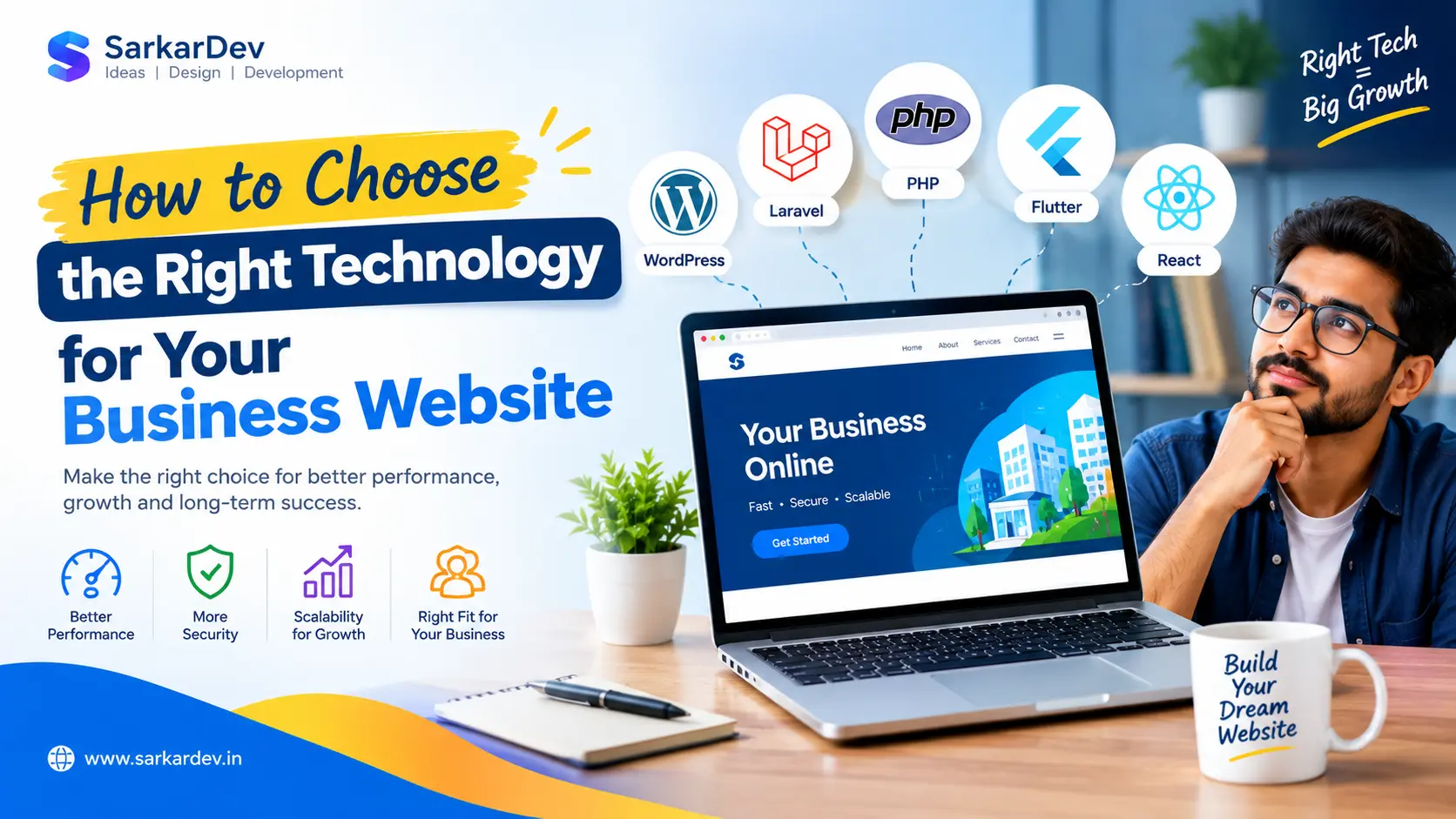
Building a business website is an important step toward establishing a strong online presence. However, before starting development, one important question arises: which technology should you choose?
With so many options available, including WordPress, PHP, modern JavaScript frameworks, and custom web development, choosing the right technology can feel confusing.
The best choice depends on your business goals, budget, required features, and plans for future growth. In this guide, we will explore the most popular website development technologies and help you understand which option may be right for your business.
1. WordPress: Best for Content-Driven Websites
WordPress is a popular content management system that allows businesses to create and manage websites without building everything from scratch.
It is suitable for business websites, blogs, portfolios, and many types of online stores.
Key benefits:
Easy content management.
A wide range of themes and plugins.
SEO-friendly features with suitable configuration.
Flexible options for business websites.
Lower initial development costs for many common projects.
Best for: Small businesses, bloggers, freelancers, agencies, and companies that regularly publish content.
However, choosing reliable plugins, maintaining security, and optimising performance are important for a successful WordPress website.
2. PHP: A Flexible Option for Custom Websites
PHP is a server-side programming language used to build dynamic websites and web applications.
It can handle form submissions, user accounts, database operations, and other backend functionality. Developers can also use frameworks such as Laravel to organise larger projects.
Key benefits:
Flexible backend development.
Database integration.
Support for dynamic business applications.
A mature development ecosystem.
Options for building custom functionality.
Best for: Customer portals, business management systems, booking platforms, and database-driven websites.
PHP can be a practical choice when your project requires functionality beyond a standard informational website.
3. JavaScript Frameworks: For Modern Web Experiences
JavaScript is essential for interactive web development. Frameworks and libraries such as React and Vue can help developers build responsive user interfaces and complex web applications.
These technologies can be useful when a project needs dynamic content, interactive dashboards, or a rich application-like experience.
Key benefits:
Interactive user interfaces.
Reusable components.
Support for complex frontend experiences.
Integration with APIs and backend services.
Flexible development approaches.
Best for: SaaS platforms, interactive dashboards, advanced customer portals, and complex web applications.
Not every business website needs a JavaScript framework. For a simple website, a lighter approach may be more cost-effective and easier to maintain.
4. Custom Web Development: Built Around Your Requirements
Custom web development involves creating a solution tailored to your business needs.
Instead of relying entirely on a ready-made theme or plugin, developers can build specific features and workflows for your organisation.
For example, a business might need customer registration, appointment scheduling, inventory management, employee dashboards, or integration with existing systems.
Key benefits:
Greater control over features.
Flexibility in application architecture.
Custom workflows.
Integration with business systems.
Room to evolve as requirements change.
Best for: Businesses with specialised requirements, unique workflows, or plans to develop a more advanced digital product.
Custom development can require more time, planning, and investment than a standard website, so it is important to define requirements before starting.
5. Website Technology Comparison
Technology | Suitable Projects | Main Advantage |
|---|---|---|
WordPress | Business websites and blogs | Convenient content management |
PHP | Dynamic websites and backend systems | Flexible server-side development |
React or Vue | Interactive web interfaces | Rich user experiences |
Custom development | Specialised business applications | Tailored functionality |
These options are not always mutually exclusive. For example, a project can use PHP for its backend and JavaScript for interactive features. WordPress can also be extended with custom code.
6. What Should You Consider Before Choosing?
Before selecting a technology, consider these important factors.
Business goals: Decide whether you need a simple online presence, an online store, or a full web application.
Budget: Consider both the initial development cost and ongoing expenses, including hosting, maintenance, licences, and future improvements.
Required features: List essential features such as contact forms, booking, online payments, user accounts, or database integration.
Performance and security: Choose an approach that supports fast loading, secure data handling, regular updates, and appropriate testing.
Scalability: Think about how your requirements may change as your business grows. Avoid paying for unnecessary complexity today, but plan for realistic future needs.
Maintenance: Make sure the website can be updated, monitored, and maintained without unnecessary difficulty.
7. Which Technology Is Best for a Small Business?
For many small businesses, WordPress is a practical starting point because it offers convenient content management and a broad ecosystem of extensions.
A custom PHP solution may be more appropriate when the business needs specialised backend functionality. React or Vue may be useful when the user interface requires significant interactivity.
There is no universally best technology. The right decision is the one that meets your requirements without adding unnecessary cost or complexity.
Conclusion
Choosing the right technology is one of the most important decisions in website development. WordPress, PHP, JavaScript frameworks, and custom development each have their own strengths.
Start by identifying your business goals, defining your essential features, and setting a realistic budget. Then choose a technology that supports your current needs and allows practical improvements in the future.
At SarkarDev.in, we believe that effective web development starts with understanding the business behind the website. The right solution should not only look professional but also help your business serve customers and achieve its goals.
Planning a new business website? Visit SarkarDev.in to explore web development solutions for your business.


Comments 2